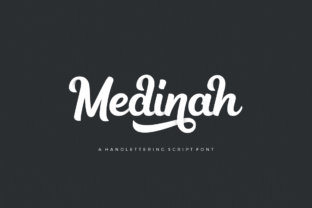
Medinah Font: Bold Script for Handmade Labels
The glow of the cutting machine’s light was the only illumination in my studio last Tuesday as I stared at a sheet of matte vinyl, waiting for the blade to finish its pass. I was designing a new line of soy candle labels for an upcoming seasonal collection, and I needed a typeface that felt both luxurious and approachable. Standard block letters felt too industrial, and delicate calligraphy disappeared against the dark amber glass jars. That is when I loaded Medinah into my design software. Watching the plotter trace those thick, confident strokes was a relief; this wasn't just another script font, it was a bold statement that promised to hold its own on physical products.
For makers and handmade sellers, finding a premium font that balances artistic flair with commercial readability is a constant challenge. Medinah fits into that sweet spot perfectly. As a stunning and bold script from the Script Amp category, it carries a visual weight that demands attention without feeling heavy or outdated. When I peeled back the transfer tape to reveal the finished label, the lettering had a tactile quality even in vinyl form. It transformed a simple product identifier into a piece of boutique branding, giving the candle an immediate sense of curated quality that customers recognize instantly.
Elevating Product Packaging and Physical Labels
In the world of handmade goods, packaging is often the first physical touchpoint a customer has with your brand. Whether you are selling at a craft fair or shipping an online order, the typography on your tags, boxes, and bags sets the tone. Medinah excels here because of its high contrast and deliberate stroke variation. Unlike thinner handwritten fonts that can get lost on textured paper or fabric, Medinah’s boldness ensures legibility across various materials.
I recently tested this typeface on unbleached kraft paper tags for a small batch of organic soap. The dark ink against the natural fiber created a beautiful, earthy aesthetic that aligned perfectly with the product's values. Because Medinah is a display font at heart, it works best when given room to breathe. I found that using it solely for the product name—"Lavender & Oat" or "Citrus Grove"—while pairing it with a clean sans serif font for the ingredients list created a professional hierarchy. This font pairing strategy not only improves readability but also signals to the buyer that the product was designed with intention and care.
Practical Applications for Makers
- Candle and Wax Melt Labels: The bold strokes remain crisp on curved glass surfaces and dark backgrounds.
- Boutique Clothing Tags: Ideal for heat-transfer vinyl on tote bags, t-shirts, and linen aprons where fine lines might crack or peel.
- Wedding Signage: Perfect for welcome boards and seating charts where text needs to be read from a distance.
- Product Photography Props: Use Medinah on acrylic discs or wooden slices to create cohesive styling elements for listing photos.
- Seasonal Gift Tags: The expressive style adds warmth to holiday packaging without requiring elaborate illustrations.
Digital Downloads and Printable Design Strategy
Beyond physical crafting, Medinah is a powerhouse for printable creators and digital stationery designers. When designing editable templates for Etsy or Creative Market, the goal is to provide assets that look professional straight out of the box while remaining user-friendly for the end customer. A common pitfall in template design is choosing scripts that are too complex for average users to modify. Medinah avoids this by maintaining excellent letter spacing and clear character distinction, even in its most decorative alternates.
While working on a set of printable wall art quotes, I utilized Medinah’s swashes to frame key words without cluttering the composition. The font’s personality is inherently warm and inviting, making it suitable for nursery decor, kitchen signs, and motivational posters. For digital products, perceived value is everything. Using a distinctive typeface like Medinah elevates a simple PDF from a basic document to a premium design asset. However, it is crucial to remember that this is a display typeface. In my planner page designs, I reserve Medinah exclusively for headers and monthly titles, relying on simple serif or sans serif fonts for the daily grid and functional text to ensure the user experience remains frustration-free.
Navigating Production Constraints and Readability
As much as we love the aesthetic of bold scripts, practical production constraints dictate what actually sells and functions well. When using Medinah with cutting machines like Cricut or Silhouette, the thickness of the strokes is generally forgiving, but attention to detail matters. Always check your welds before sending the job to the cutter. While Medinah connects beautifully, scaling it down below two inches for small stickers can sometimes cause internal counters (the enclosed spaces in letters like 'a' or 'e') to fill in during the weeding process. For miniature applications, I recommend testing a cut on scrap material first or slightly increasing the letter spacing to maintain integrity.
Readability is equally vital for commercial success. A font can be breathtakingly beautiful, but if customers cannot decipher the product name or the sentiment on a greeting card in under three seconds, it fails its commercial purpose. Medinah strikes a rare balance where the artistic flourishes enhance rather than obscure the message. When designing for social media graphics or web banners, ensure there is sufficient negative space around the text. Crowding a bold script against busy photography or patterned backgrounds diminishes its impact. Let the typography be the hero element, supporting it with solid colors or subtle textures that allow those sweeping curves to shine.
Licensing and Technical Considerations for Sellers
Before incorporating any new typeface into your shop, understanding the licensing and technical specifications is non-negotiable. Medinah is a commercial font, but terms vary by foundry and purchase tier. Always verify whether your license covers physical end products, digital templates, or both. If you plan to sell SVG files featuring Medinah lettering, confirm that the license permits the distribution of derivative vector files, as many standard desktop licenses restrict this specific use case.
- Check File Formats: Ensure you have OTF or TTF files for desktop design software and WOFF/WOFF2 if you intend to use the font in web design or Shopify store customization.
- Explore Alternates: Medinah often includes stylistic alternates and ligatures. Open these in your glyph panel to customize connections and avoid repetitive letterforms in longer phrases.
- Multilingual Support: If you serve an international market, verify the font’s language support to ensure accented characters render correctly for French, Spanish, or German customers.
- Commercial Limits: Review any caps on unit sales or revenue thresholds. Upgrading to an extended commercial license early prevents legal headaches as your business scales.
Integrating Medinah into my creative workflow has been less about following trends and more about establishing a consistent visual voice. Whether I am pressing a sticker onto a mailer box or finalizing a digital invitation template, this typeface provides the confidence that my work will stand out in a crowded marketplace. It reminds us that in the handmade community, typography is not merely decoration; it is the bridge between our craftsmanship and the people who cherish it. By treating font selection with the same care we apply to material sourcing and construction, we honor the value of our creations and build brands that resonate deeply with our audience.